Research Briefing
| Jan 26, 2024
Rise of new megacities will drive global urban growth
The population of the world’s 1,000 largest and most important global cities is forecast to increase by more than half a billion by 2050. However, this urban demographic growth is not equally distributed across the world’s cities. Those in Africa and emerging Asia Pacific are set to see huge rises in their populations, but many cities across China, Europe, and advanced Asia Pacific are set to plateau or even decline.
What you will learn:
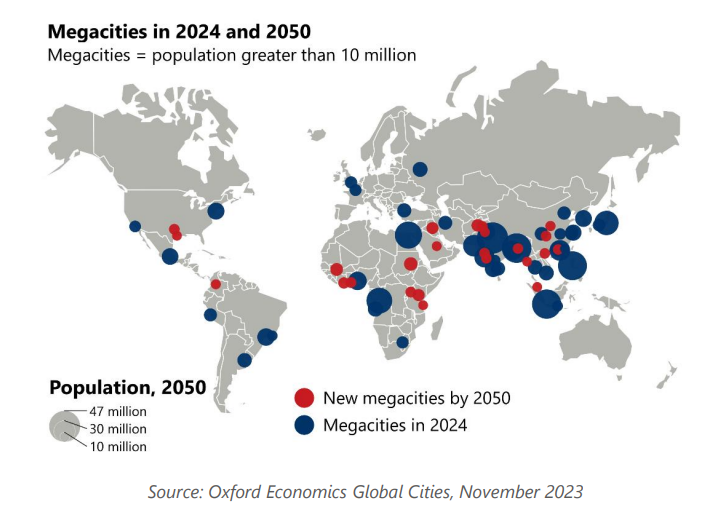
- A key dynamic within the expansion of the world’s urban population is the continuing rise and emergence of megacities—cities with populations of over 10 million. We forecast there will be 67 megacities around the world in 2050, up from 44 today. Together, the population of these megacities is expected to increase by 266 million—around half of the total population growth across all 1,000 cities.
- The fastest growing among these cities will most certainly be in Africa, fuelled by sky-high rates of natural change reflecting the younger age profile of their residents. The megacities in emerging Asia Pacific, however, are still expected to be the largest. We forecast Delhi to be the largest megacity in the world in 2050, with a population of nearly 47 million.
- Megacities with older demographic structures in more developed nations across Europe and advanced Asia Pacific, such as Paris and Tokyo, will rely on net migration for population increases in the long term, as the resident population of childbearing age in these cities declines. There are, however, a handful of new megacities in the United States expected to emerge.